
If you’re looking up tips for driving in Ireland, you’re probably asking yourself this question first:
Is renting a car in Ireland even worth it?
And if you plan to leave Dublin, then yes. Completely.
Driving in Ireland isn’t just a way to get around, because there are definitely buses and some trains. Rather, having a car lets you explore so much more! From the coastal highways to the hidden beaches and castle ruins… there is a lot you’ll miss without a car.
Public transport is accessible for connecting a lot of the major cities like Dublin and Galway, but it won’t take you to the most scenic parts. Plus, you can’t convince the bus driver to pull over and stare at the view for a while .
If you want freedom on your trip and to see the best parts, driving in Ireland is worth it.
TLDR: Use DiscoverCars to book your rental and keep in mind insurance is required. Tilt your side mirrors down to see the lines. You’ll instantly feel more confident.
Renting a car in Ireland
Before we talk about the road size or driving on the opposite side, we need to talk about renting a car.
Ireland requires all rental cars to include basic insurance coverage (which is unsurprising). This means every car includes something called CDW (Collision Damage Waiver). The only way to avoid this fee is if you book a different type of insurance.
Or if you’re more worried about the amount of coverage, keep in mind that the CDW is a very basic insurance. This included coverage usually comes with a high deductible, which means you would likely owe a large amount out of pocket if anything happens.
Because of this, most travelers choose to add additional coverage to reduce that cost. And yes, that’s also why renting a car in Ireland can be a bit more expensive than expected.
If you’re not comfortable driving a manual car on the opposite side of the road, I recommend booking an automatic transmission early. They aren’t as common and tend to sell out much faster in Ireland.
Some credit cards offer rental coverage, but many do not cover Ireland specifically. Make sure you read up on your specific card before you book so you know how much coverage you have.
This is why I always book through DiscoverCars and recommend it to you too. This platform is a rental car search engine that compares multiple companies at once to find you the best price. Plus, you can clearly see and add insurance if wanted before you arrive. It helps reduce the anxiety of renting a car and offers the true total cost upfront.
Plan to pick up your car directly from the airport if possible. It’s usually much easier than going in and out of Dublin. And finally, don’t forget to take tons of pictures of your car before you drive off so you have evidence of any existing blemishes or issues!
Extra insurance and smart planning tips
While we’re on the topic of insurance, double check your travel medical coverage before you go. Having travel medical insurance adds an extra layer of protection and peace of mind, especially when you’re driving unfamiliar roads and exploring rural areas. My personal favorite is this deductible free travel medical insurance that I always use.
If you’re worried about costs, I share all my best advice in my guide on how to travel Ireland without overspending. I share accommodation tips, food, activities, and more if you want some ways to save during your trip.
Driving on the left (p.s. it’s not as scary as you think)
I’m sure you know about how Irish roads are the opposite of most countries, the same as England. You’ll be driving on the left side of the road and sitting on the right side of the car.
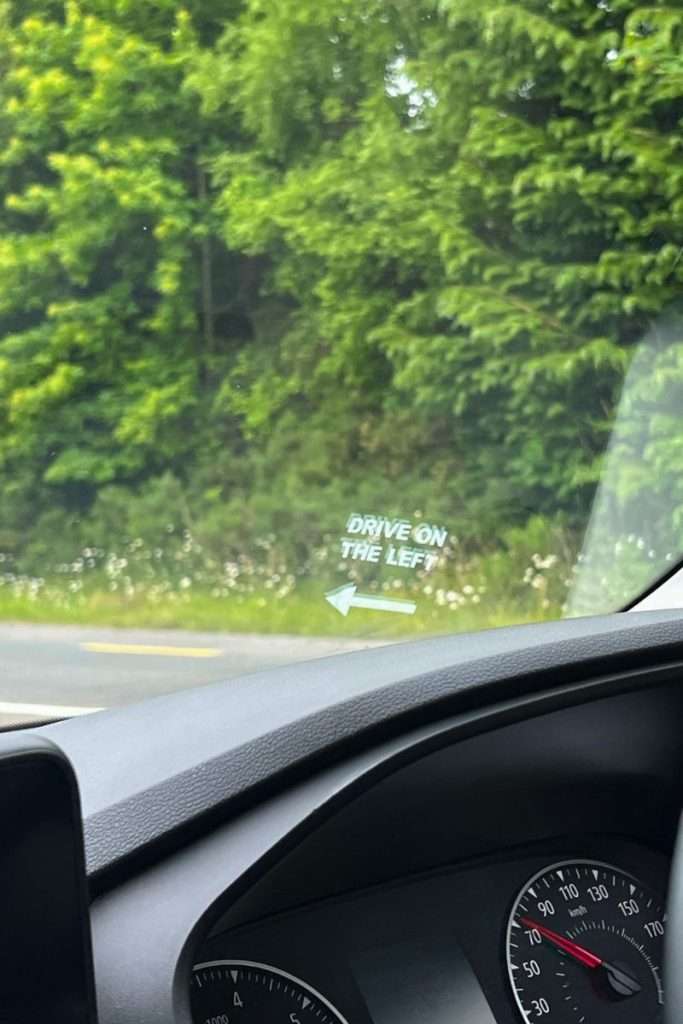
But on the bright side, most rental cars in Ireland have a small reminder near the driver’s seat that literally says “Drive on the Left.” You see it constantly, along with a little arrow pointing left. This helped me a lot more than I expected during those first few days.
One little mental trick that helped me is reminding myself that I should always be closest to the center line. If you feel too close to the curb, you probably are.
Within 24 to 48 hours, it starts to feel surprisingly normal. Just don’t get too comfortable, remind yourself that you’re still a new driver to this side of the road.
Narrow roads and rural driving
When people look up tips for driving in Ireland, the road size is usually the real concern. And you’re not alone, I was in the same boat when I first drove in Ireland.
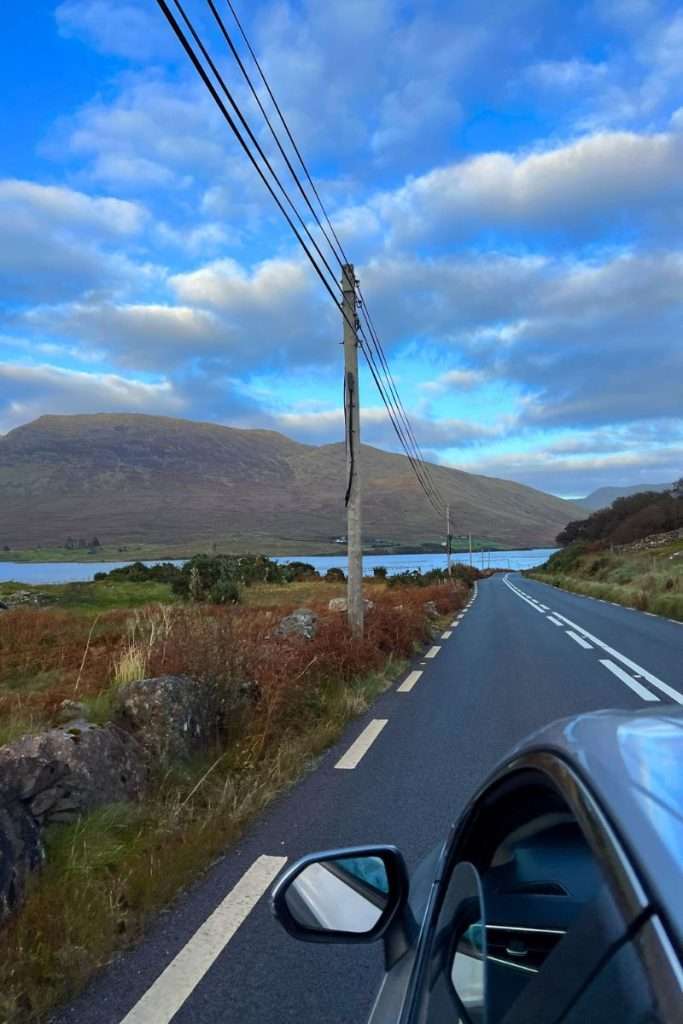
Outside the cities, roads get pretty narrow. I want to point out that the highways and main roads are still very doable with lots of space. When talking about those narrow streets though, it can be really hard to position yourself in the right part of your lane to feel safe and comfortable.
You may find yourself driving between stone walls that don’t look big enough for two cars. You might be heading over a hill without seeing what’s on the other side. And yes, sheep wandering nearby is totally normal, but they usually have fences.
The key is slowing down and staying calm.
How to handle these narrow roads
Speed limits are posted in kilometers per hour, but on rural roads, the listed number can feel very high. Keep in mind, this number is not a target goal, it is indeed a limit. Drive at a pace that feels safe to you. No one expects (or wants) visitors to speed through the countryside.
You’ll notice small pull off sections of the road, especially on tight roads. These are purposely placed there so cars have enough space to pass each other. If a local driver is coming up behind you or in front of you on a narrow road, pull into one of these spots to let them pass.
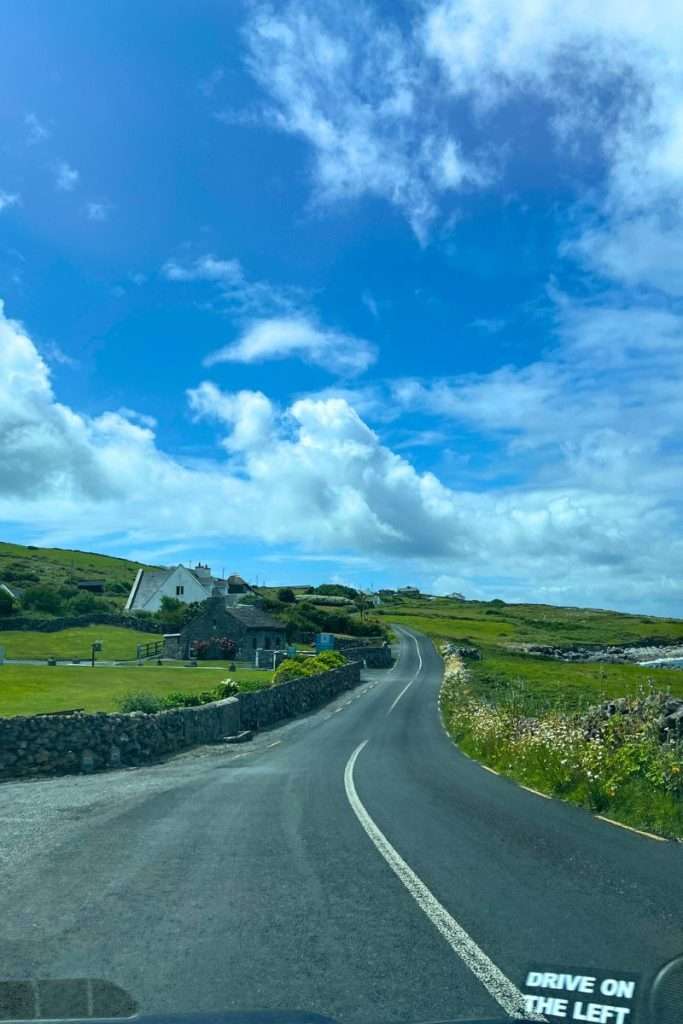
Also, if you are on a road that is too narrow for two cars, whoever is closest to a pull off should back up so there is enough space to get around. In most scenarios, you should do that because you’re the foreigner who probably shouldn’t try to squeeze.
And this is where the mirror trick becomes very helpful. The mirror trick is one that I learned after my passenger kept telling me to watch out because the side of the road is usually a ditch.
Here’s the trick: Tilt your side mirrors down slightly so you can see the road lines or the edge of the pavement (for where there aren’t lines). This trick makes staying centered much easier, and helps you feel more comfortable in the lane. Plus, it helps give you confidence that you won’t hit the car coming in your direction on the other side of the road.
Speed limits and road signs
Ireland uses kilometers per hour instead of miles, which can take a bit of adjusting if you’re coming from the U.S. I would recommend switching your phone to that too for the map’s directions, if it doesn’t automatically do that when you arrive.